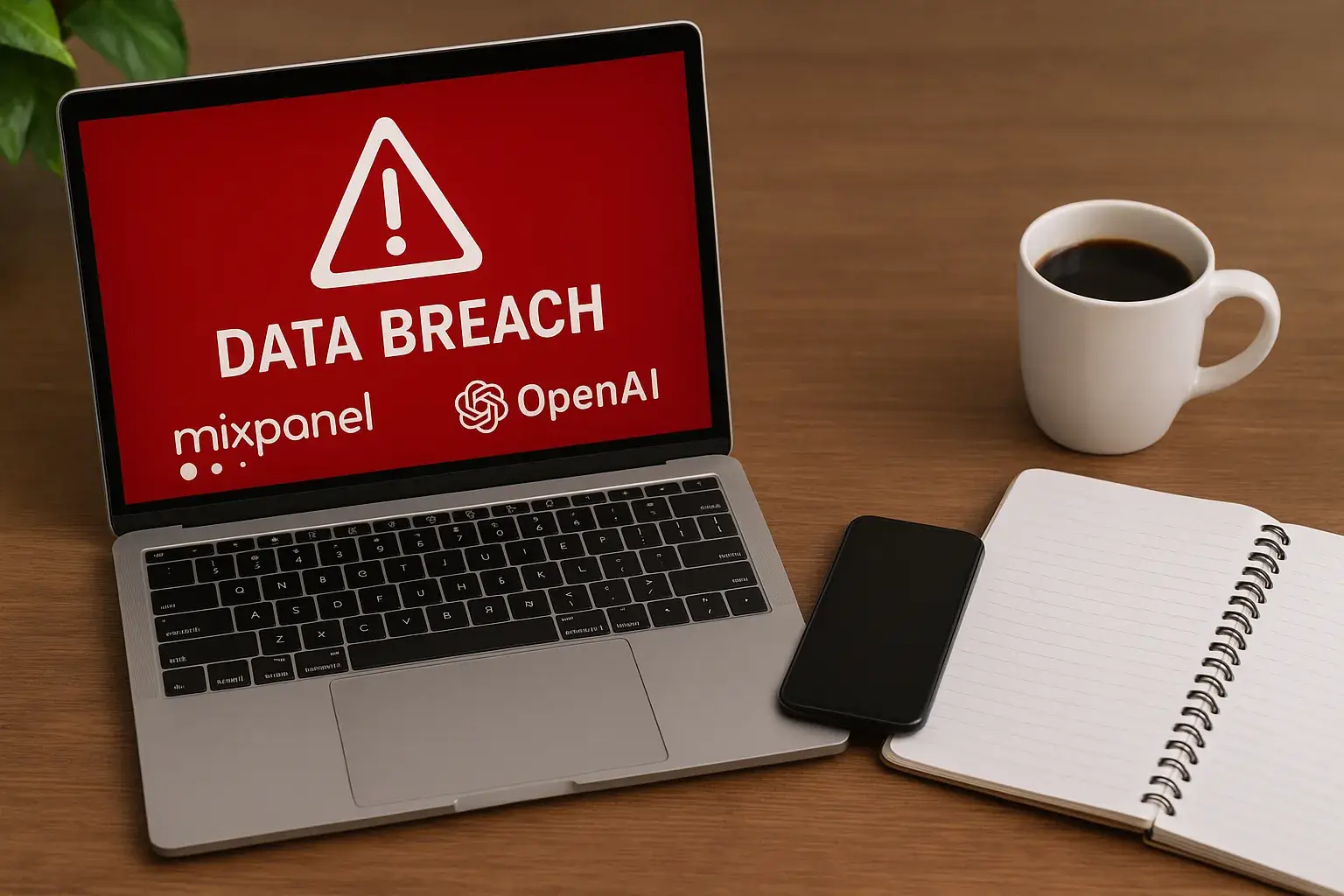
In late 2025, the tech world buzzed about a data breach involving OpenAI and Mixpanel — raising concern among developers, AI users, and businesses relying on Artificial Intelligence (AI) services. Although many people heard about it via email or news alerts, understanding what truly happened, who was affected, and how to stay safe matters — especially if you use ChatGPT or the OpenAI API. This article breaks down the incident in clear, non-technical language and offers practical guidance.
What Was the OpenAI Data Breach?
Contrary to widespread confusion, OpenAI itself was not hacked. The breach came from a third-party analytics provider called Mixpanel, which OpenAI had been using to collect user interaction data for its API service.
Here’s a simple breakdown:
- On November 9, 2025, Mixpanel detected unauthorized access to parts of its system.
- This allowed attackers to export a dataset including certain user information tied to OpenAI’s API accounts.
- OpenAI’s own systems — including ChatGPT infrastructure — were not breached.
So, the OpenAI data breach came indirectly through Mixpanel’s analytics system and not through OpenAI servers. The AI company quickly recognized this distinction and communicated it to its developers and customers.
Why Mixpanel Matters in the OpenAI Ecosystem
Mixpanel is a widely used analytics platform that helps companies understand how people interact with digital products. In the case of OpenAI:
- Mixpanel tracked how developers were using the OpenAI API, including usage patterns and platform interactions.
- This helps OpenAI improve performance, product features, and tools that power sophisticated Artificial Intelligence applications.
However, when Mixpanel was breached, it exposed information tied to those developer accounts — and that’s where the risk originated.
What Data Was Exposed in the Mixpanel Leak?
According to official statements from OpenAI and multiple news sources, the leaked information was limited and did not include highly sensitive data like:
- Chat logs generated by ChatGPT
- API keys or credentials
- Passwords or payment information
- Government-issued IDs or legal documents
However, the data that was exposed included:
- Name associated with API account
- Email address tied to the API account
- Approximate location (city, state, country) linked to usage
- Operating system and browser details
- URLs of referring websites
- User or organization ID for the API account
This type of data may seem “low risk,” but it can still be valuable for attackers in social engineering or phishing attacks.
Who Was Affected? OpenAI API vs. ChatGPT Users
One of the most important clarifications from OpenAI is:
➡ ChatGPT consumer accounts were NOT affected.
➡ Only users of the OpenAI API platform were potentially impacted.
This distinction matters because:
- ChatGPT users (people who use the chatbot for personal conversations) did not have their chats, personal data, or credentials exposed.
- Developers and organizations that use the OpenAI API — often to build AI-powered products — might have had their metadata exposed.
Still, even if the impact is limited, any data leak — especially one involving an **Artificial Intelligence service provider like OpenAI — raises important security concerns.
Why This Matters for AI and Developers
This OpenAI data breach is a great reminder that:
- AI systems rely on many third parties — and a breach at one service can affect others.
- Analytics tools like Mixpanel collect metadata that may not be secure if the vendor is compromised.
- Developers integrating AI services must consider vendor risk as part of their security strategy.
In today’s AI ecosystem, where technologies such as ChatGPT and advanced machine learning platforms are deeply embedded in digital products, even small metadata leaks can open doors for attackers.
OpenAI’s Immediate Response to the Mixpanel Incident
After learning about the breach, OpenAI acted quickly:
- Removed Mixpanel from production systems to stop any further data flow.
- Reviewed the exported dataset to understand what was exposed.
- Notified affected organizations and users directly via email and support messages.
- Increased security requirements and reviews for all third-party vendors going forward.
This kind of rapid action helps contain the potential damage and signals a shift toward stronger vendor security oversight in AI development environments.
What You Should Do as a User or Developer
Even if your core AI data (like ChatGPT chats or API responses) wasn’t leaked, you should still be cautious. Here are recommended steps:
1. Stay Alert for Phishing Attempts
Exposed names and emails could be used to craft convincing phishing emails. Always double-check senders and avoid clicking suspicious links.
2. Enable Multi-Factor Authentication (MFA)
Adding MFA greatly reduces the risk of unauthorized access if credentials ever leak.
3. Watch Account Activity
If you use the OpenAI API, watch for unusual activity or unexpected usage patterns.
4. Use Strong, Unique Passwords
Make sure passwords for your developer or AI platform accounts are secure and unique.
These steps can protect you from most common threats following such a breach.
What This Incident Teaches About AI and Security
The OpenAI–Mixpanel situation highlights several broader lessons about AI security:
- Third-party risk is real — even trusted services can be a weak link.
- Data governance matters more than ever in Artificial Intelligence environments.
- Transparency from companies like OpenAI builds trust with users and developers.
AI platforms must ensure that not just their systems, but the systems of their partners, maintain high standards of security.
Conclusion: OpenAI Data Breach and Your Safety
The OpenAI data breach via Mixpanel was a wake-up call for the AI community. While it did not involve sensitive information like chat content, API keys, or passwords, it did expose metadata that could be used in phishing or social engineering attacks.
If you are a developer using the OpenAI API, stay vigilant and follow basic cybersecurity steps. If you’re a regular ChatGPT user, you can rest assured that your personal chats and credentials were not impacted.
In the fast-evolving world of Artificial Intelligence, understanding how data flows through tools like Mixpanel and platforms like OpenAI helps us stay safe and informed.