The digital landscape changes incredibly fast. Staying competitive means adopting the right tools and infrastructure. One of the biggest shifts in 2026 is how companies manage their online content. If your business still relies on a traditional CMS, you might find yourself falling behind the curve.
Today, consumers expect instant load times. They demand seamless experiences across mobile phones, smartwatches, and interactive displays. Meeting these demands requires speed and ultimate flexibility. That is where new technology steps in.
Enter the headless CMS. This innovative approach to content management is transforming the digital world. It offers a faster, more secure, and highly scalable way to build modern websites. But what does this term actually mean? More importantly, why are so many brands making the switch right now? Let us dive into the details.
What Exactly is a Headless CMS?
To understand this concept, we first need to look at how websites were built in the past. Older platforms are tightly connected. The backend is where you write and store your content. The frontend is the visual design that your visitors actually see. In a traditional CMS, these two parts are permanently linked together. You cannot change one without affecting the other.
A headless CMS changes the rules entirely. It removes the frontend presentation layer completely. Think of the frontend design as the “head” and the backend database as the “body.” This modern architecture chops the head off.
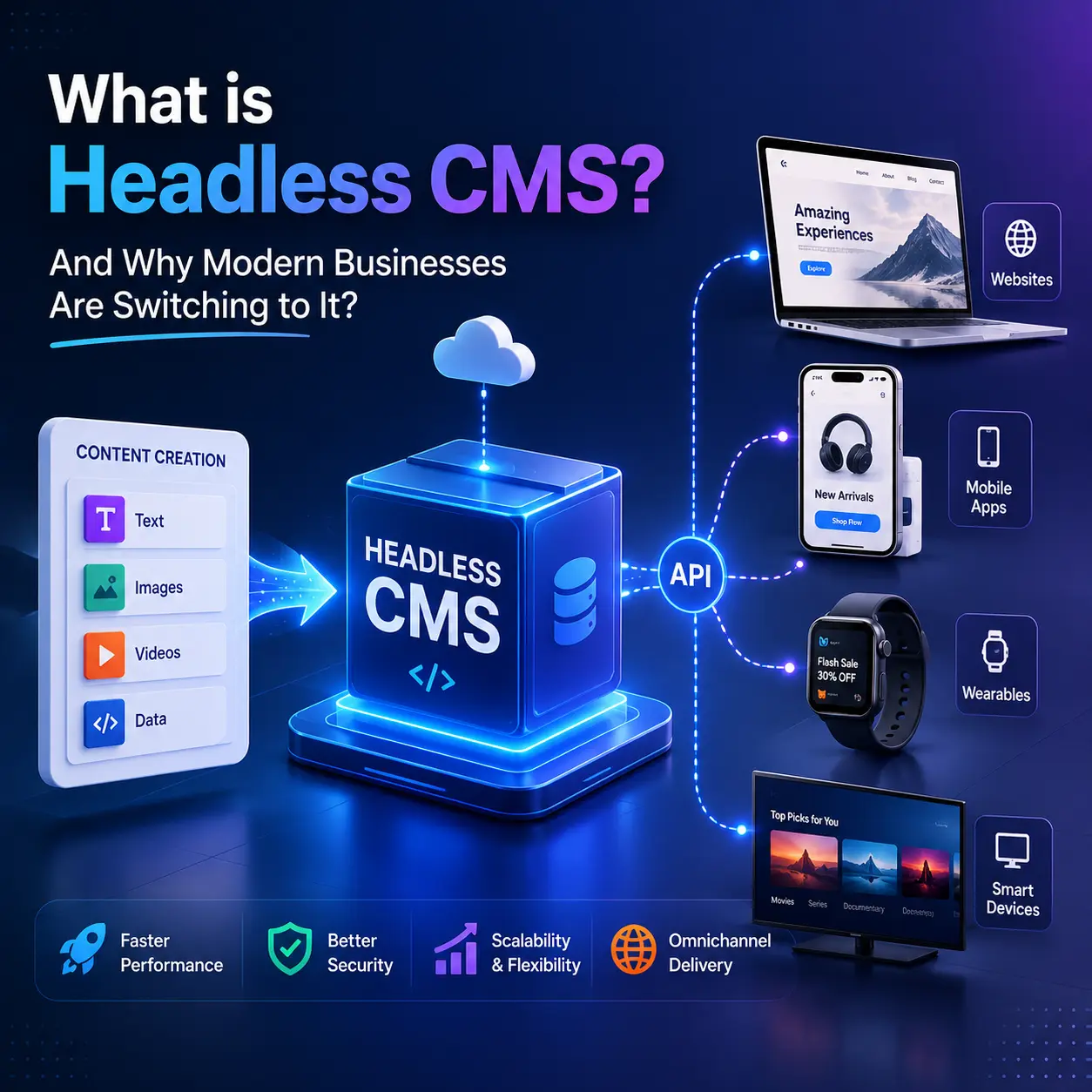
Instead of forcing your content into a specific web page template, the platform acts as a centralized content hub. You write and manage your data in one single place. Then, developers use specific tools called APIs to push that data absolutely anywhere. The content is pure and raw. It can be sent to a website, a mobile application, a digital billboard, or a smart home device. The presentation layer is built separately using whatever modern framework a developer prefers.
The State of the CMS Market in 2026
The adoption of decoupled architecture is no longer just a technical experiment. It has become a core business strategy across the globe. Industry research shows massive market expansion right now. The sector is projected to grow from roughly 3.94 billion dollars in 2026 to over 22 billion dollars by 2034. This represents a compound annual growth rate of more than 21 percent.
Why is there a sudden explosion in growth? In 2026, businesses face unique and difficult challenges. They must serve content to more digital devices than ever before. Furthermore, artificial intelligence is reshaping daily operations. Modern headless CMS platforms now include autonomous AI agents. These agents assist marketing teams by structuring data and automating routine daily workflows.
Additionally, the rise of edge computing has changed user expectations entirely. High-speed 5G networks are everywhere. Users now expect complex websites to load in less than one second. Older, tightly coupled systems simply cannot keep up with this demand. The market is shifting because ultimate speed and agility are now baseline requirements for digital survival.
Why Modern Businesses Are Switching to a Headless CMS
There are several compelling reasons driving this massive industry shift. Let us explore the primary benefits that modern companies unlock when they upgrade their infrastructure.
Omnichannel Content Delivery
In the past, you only needed to publish content to a single website. Today, your audience is everywhere. They interact with your brand on mobile applications, voice assistants, and smartwatches. Even physical in-store digital kiosks require constantly updated data.
With older systems, you have to copy and paste your text into different platforms manually. This process wastes valuable time and creates embarrassing brand inconsistencies. A decoupled system solves this problem completely. You write a product description once in your central database. The API then distributes that exact description to your website, your app, and your smart devices simultaneously.
You maintain a single source of truth for all your digital channels. If you need to update a price or change a headline, you edit it in one place. The update pushes out to every connected device instantly. This level of efficiency is mandatory for modern marketing teams.
Blazing Fast Performance and Core Web Vitals
Website speed is absolutely critical for success in 2026. Slow load times frustrate users and ruin your sales conversion rates. Furthermore, search engines actively penalize slow websites. Metrics known as Core Web Vitals are strictly enforced ranking factors today.
Most traditional CMS architectures often suffer from bloated, heavy code. Every time a user visits a page, the server has to build that page from scratch. This processing takes precious time. Decoupled platforms operate entirely differently. The frontend is fully separated from the backend logic.
Developers can use static site generation and global edge networks to serve web pages instantly. New technologies like WebAssembly allow complex code to run at near-native speeds right in the browser. Because the browser only downloads essential data, load times drop dramatically. Faster websites lead directly to happier customers and much higher search engine rankings.
Unmatched Developer and Marketer Flexibility
Older platforms force developers to use specific programming languages and outdated design templates. This severely restricts technical creativity and slows down the software development process. Conversely, the right CMS empowers your team instead of limiting them.
With an API-first approach, developers can use modern frontend frameworks. They can build fast, dynamic user interfaces without worrying about backend database restrictions. They get to use the modern tools they actually enjoy working with.
At the same time, marketers are not left behind. A common misconception is that decoupled platforms are too technical for marketing teams. In 2026, this is completely false. Modern platforms feature highly intuitive, AI-native visual editors. Marketing teams can create campaigns, test new page layouts, and publish content independently. They do not have to constantly ask developers for help. Both teams get to use the best possible tools for their specific jobs.
Future-Proofing and Stronger Enterprise Security
Technology changes rapidly. A new smart device or visual frontend framework could become incredibly popular tomorrow. If your system is tightly linked, adopting new technology requires completely rebuilding your entire website from scratch. This is expensive and incredibly time-consuming.
With decoupled architecture, your backend data remains safe and completely untouched. If you want to launch a new mobile app, you only need to build a new frontend. You just connect it to the existing API. This makes your digital presence truly future-proof.
Security is another major advantage driving the switch. Older platforms are frequent targets for hackers. They often rely on vulnerable third-party plugins that compromise the whole server. Because a modern decoupled platform separates the backend database from the public website, the attack surface is much smaller. Your actual content repository is hidden behind highly secure APIs. This makes it incredibly difficult for malicious actors to access your sensitive business data.
Real-World Use Cases for Headless CMS Architecture
Understanding the theory is great, but how are real companies actually using this technology in 2026? Here are a few prominent industry examples.
First, the e-commerce sector is leading the charge globally. Online retailers are embracing a concept known as composable commerce. Today, over 92 percent of major brands have adopted modular systems. They use decoupled platforms to manage vast product catalogs. They deliver highly personalized shopping experiences across multiple devices without slowing down the checkout process.
Second, large digital media publishers use these systems to handle massive amounts of global traffic. News organizations need to push breaking news alerts to web browsers, mobile applications, and social media feeds instantly. A centralized content hub makes this rapid distribution possible. The architecture ensures the website does not crash under heavy server loads during major global events.
Finally, global enterprises with complex internal portals benefit greatly. They can combine data from multiple software systems into a single, unified employee dashboard. The ultimate flexibility of API integrations allows large corporations to streamline their internal communications effortlessly.
Potential Challenges to Consider
While the benefits are massive, transitioning to a new digital infrastructure is a very big decision. There are a few practical challenges that businesses must consider carefully before making the switch.
The biggest hurdle is the initial technical learning curve. Investing in a CMS of this advanced nature requires dedicated technical expertise. Unlike simple consumer website builders, you cannot just install a pre-made theme and launch a site in one single afternoon. You must have developers build the frontend presentation layer from scratch.
Additionally, the upfront software development costs can be noticeably higher. You are essentially building a custom software application tailored to your brand. However, most companies find that the long-term financial savings easily justify the initial expense. System maintenance becomes much easier over time. You also completely avoid costly, stressful website rebuilds in the future. It is a strategic financial investment for long-term business growth.
Is a Headless CMS Right for Your Business?
Deciding to upgrade depends heavily on your specific business goals. If you run a simple, one-page local business site, a traditional setup is probably perfectly fine for your needs. However, if you are a rapidly growing enterprise, an ambitious e-commerce brand, or a large media publisher, the switch is highly recommended.
If you need to deliver digital experiences across multiple digital channels efficiently, you absolutely need this architecture. If you want a corporate website that loads in under a single second, this is the best solution available. If you want to protect your valuable company data with enterprise-grade security, you should strongly consider making the transition today.
Conclusion
The rapid shift toward decoupled digital architecture is truly undeniable. As we progress deeper into 2026, consumer expectations for web speed, platform flexibility, and rich personalization will only continue to rise. Continuing to rely on outdated, tightly coupled infrastructure is a massive risk most growing businesses can no longer afford to take.
By completely separating your backend data from your frontend presentation, you unlock massive business potential. You empower your marketing team to publish anywhere instantly. You allow your developers to build blazing-fast user interfaces safely. Most importantly, you secure your corporate data against modern online threats. Modern CMS solutions provide the exact technical foundation you need to thrive in a highly competitive digital landscape. Evaluate your current business goals carefully, consider the massive benefits outlined above, and decide if it is time to upgrade to the perfect CMS for your needs.