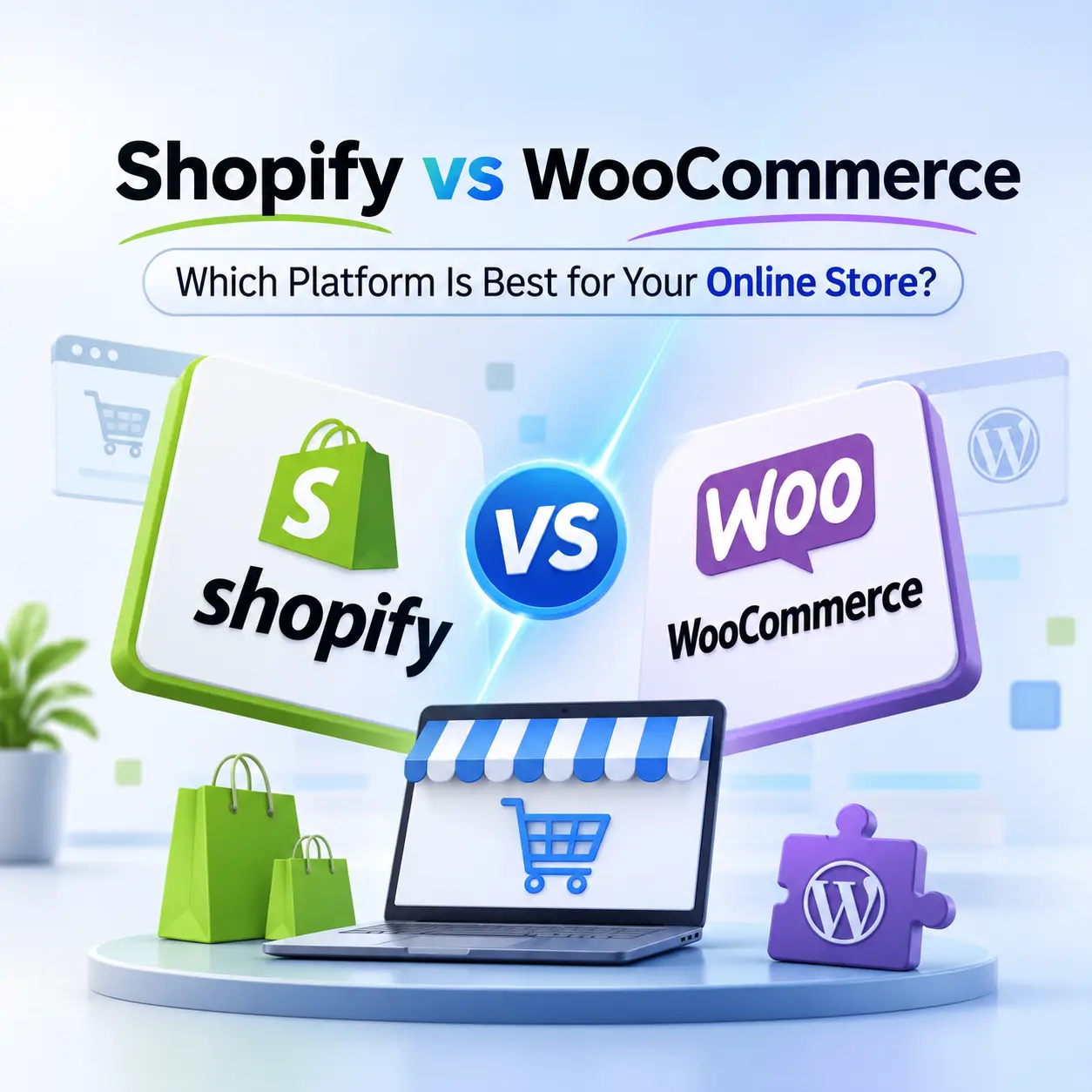
Choosing an e-commerce platform is one of the most important decisions you’ll make for your online store. Shopify and WooCommerce are two of the most popular options, but they work very differently. This guide compares them side by side so you can pick the one that fits your business.
The Short Answer
Shopify is a hosted platform that handles most of the technical work for you, which makes it quicker to launch. WooCommerce is a free plugin that turns a WordPress website into an online store, which gives you more control but also more responsibility. Neither is better in every case. The right choice depends on your budget, your skills, and your plans for growth.
What Is Shopify?
Shopify is a subscription-based platform. Hosting, security updates, and checkout are managed for you, and you extend your store with apps from the Shopify App Store. You pay a monthly plan fee, and transaction fees may apply if you use a payment provider other than Shopify’s own.
What Is WooCommerce?
WooCommerce is an open-source plugin for WordPress. The plugin itself is free, but you provide your own hosting, domain, and security, and you may pay for extensions such as subscriptions, bookings, or advanced shipping rules.
Shopify vs WooCommerce: Head-to-Head
Ease of Setup
Shopify is simpler to start with. You choose a theme, add products, connect payments, and go live without managing servers. WooCommerce takes more setup because you need hosting and a WordPress site first, though many people find the process manageable with a developer’s help.
Cost
Shopify has a predictable monthly fee plus the cost of any paid apps. WooCommerce has no licence fee, but hosting, premium themes, extensions, and developer time all add up. Compare the total yearly cost for your specific needs, not just the headline price.
Design and Customisation
WooCommerce offers more freedom. Because it runs on WordPress, you can customise almost every part of the store and checkout. Shopify’s themes are polished and easy to adjust, but deeper changes may be limited or require extra tools.
SEO
Both platforms can rank well when set up properly. WooCommerce gives you more control over URL structures and technical settings, while Shopify uses set URL patterns but covers the essentials such as editable titles, descriptions, and automatic sitemaps. For either platform, strong content and site speed matter most. Our local SEO guide is a good next read if you also serve a specific area.
Payments
Both support major payment providers, digital wallets, and card payments. With Shopify, using its built-in payments avoids extra transaction fees. With WooCommerce, you choose from a wide range of gateways and compare their fees yourself.
Security and Maintenance
Shopify manages hosting and platform security. With WooCommerce, you or your developer are responsible for updates, backups, and security, which makes regular maintenance essential.
Scalability
Both platforms can support growing businesses. Shopify scales by moving to higher plans. WooCommerce scales through better hosting and custom development, which gives you flexibility but needs planning.
Who Should Choose Shopify?
- You want to launch quickly with minimal technical work.
- You prefer a predictable monthly cost.
- You’d rather not manage hosting and security.
- You mainly sell physical products with standard requirements.
Who Should Choose WooCommerce?
- You already use WordPress or run a content-led website.
- You need custom features or a highly tailored checkout.
- You want full ownership and control of your store.
- You have access to a developer or agency for ongoing support.
Questions to Ask Before You Decide
- What is my realistic budget for the first year, including ongoing costs?
- How technical am I, and who will maintain the store?
- Which special features do I need, such as subscriptions or custom product options?
- How quickly do I need to launch?
- How much do I expect to grow in the next two to three years?
Frequently Asked Questions
Can I switch platforms later?
Yes. Products, customers, and orders can usually be migrated, but moving takes planning to protect your SEO rankings and URLs.
Which platform is better for beginners?
Shopify is generally easier for beginners because there is less to set up and maintain.
Final Thoughts
The best platform is the one that matches your goals, skills, and budget today while leaving room to grow. If you’d like help choosing, building, or migrating a store, explore our e-commerce services or contact our team.