The future of coding has arrived — and it looks nothing like what most people expected. Vibe Coding is quickly becoming one of the most talked-about shifts in the world of software development. In simple terms, it is a way of building software by describing what you want in plain English and letting Artificial Intelligence (AI) write the code for you. Whether you are a seasoned developer or a complete beginner with zero programming background, Vibe Coding is opening doors that were once closed to almost everyone.
In 2026, this trend has gone from a niche experiment to a mainstream movement. The numbers speak clearly. According to recent data, 92% of US developers are now using AI coding tools on a daily basis, and around 46% of all new code written on platforms like GitHub is AI-generated. Vibe Coding is no longer the future — it is the present. This article explains what Vibe Coding is, how it works, why it matters for developers and beginners alike, and where it is headed next.
What Is Vibe Coding? A Simple Explanation
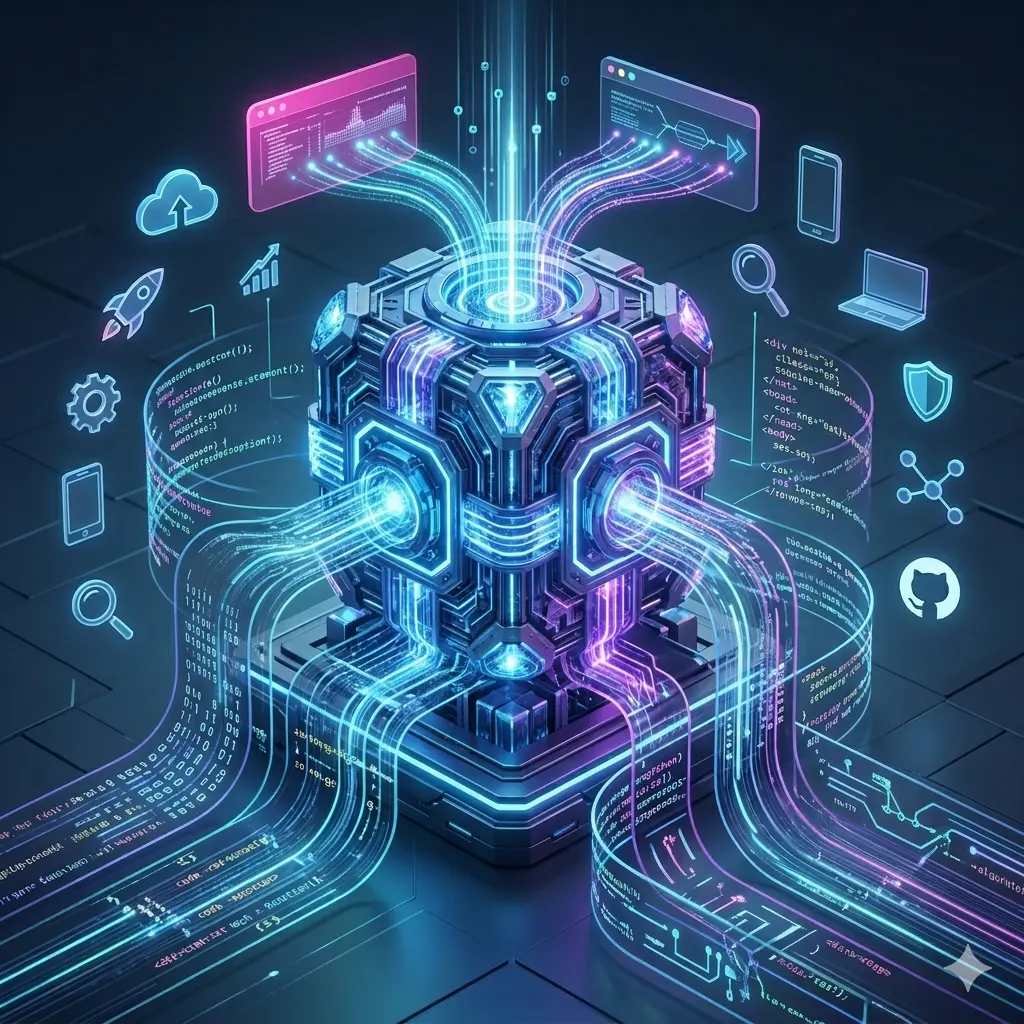
Vibe Coding is a style of programming where you communicate your goals to an AI system in natural language — like you are chatting with a friend — and the AI writes the actual code for you. You do not need to memorize syntax, programming rules, or complex commands. You just describe what you want to build, and the AI takes care of the technical parts.
The term was coined by Andrej Karpathy, a well-known AI researcher and former co-founder of OpenAI, in early 2025. His original idea was simple and bold: “fully give in to the vibes, forget that the code even exists.” What he meant was that the traditional act of writing code line by line was becoming less important. What matters now is knowing what you want to build and being able to communicate that clearly.
The idea spread so fast that Collins Dictionary named Vibe Coding its Word of the Year for 2025. By 2026, it had become a defining force in software development, and its popularity shows no sign of slowing down.
How Vibe Coding Works: The Step-by-Step Process
Understanding how Vibe Coding actually works helps you see why so many developers and non-developers are excited about it. The process is not complicated. Here is how it typically looks in practice.
Step 1 — Describe Your Idea
You start by telling the AI what you want to build. This can be as simple as: “Build me a tool that tracks my daily expenses and shows a graph after seven days.” You use plain, everyday language. No coding terms needed at this point.
Step 2 — AI Generates the Code
The AI model reads your description, understands your intent, and writes the code for you. It can handle multiple files, programming languages, and complex logic — all from your simple text prompt.
Step 3 — Review and Refine
You look at the result. Does it do what you expected? If not, you give the AI more instructions to adjust, fix, or improve it. This back-and-forth loop is what makes Vibe Coding feel natural. You are always in charge of the direction.
Step 4 — Test and Ship
Once you are happy with the result, you test it and deploy it. Some Vibe Coding platforms even handle deployment automatically, which means your app goes live without any extra steps on your end.
Experienced developers describe this workflow as the “Vibe and Verify” method — you vibe with the AI, then verify the output meets your standards before moving forward.
Why Vibe Coding Is Exploding in 2026
The growth of Vibe Coding has been remarkable. The global market for AI-assisted coding tools hit an estimated $4.7 billion in 2026. Enterprise adoption of Vibe Coding platforms grew 340% between 2024 and early 2026. Even major corporations are all in — 87% of Fortune 500 companies now run at least one Vibe Coding platform, and Google reports that a quarter of its own code is now AI-assisted.
What makes Vibe Coding especially exciting is who is doing the coding. A full 63% of people currently engaged in Vibe Coding do not have a traditional development background. Designers, teachers, marketers, entrepreneurs, and small business owners are building real, working applications — not with bootcamp degrees or years of experience, but simply by talking to AI.
Google Trends shows a 2,400% increase in searches for “Vibe Coding” since January 2025. This is not a passing moment. It is a structural change in how software gets built.
Best Vibe Coding Tools Available Right Now
A powerful set of tools has grown around the Vibe Coding workflow. Each one is built for a different kind of user. Here are the most widely used options in 2026.
Cursor
Widely seen as the leading AI-powered code editor in 2026, Cursor is built for developers who want to write code faster without giving up full control. It understands the context of your entire project and can suggest, refactor, or generate code across multiple files at once.
GitHub Copilot
This tool integrates directly into your existing code editor and provides AI suggestions as you type. It has become a standard part of many developers’ daily workflow. It is particularly useful for those who already know how to code and want to cut down on repetitive tasks.
Bolt.new and Lovable
These platforms are designed for non-developers. You describe your app idea, and the platform builds it, deploys it, and even hosts it — all without requiring you to touch a single line of code. They are popular among founders building prototypes quickly.
Replit Agent
A favorite among beginners, Replit allows you to code online and uses AI to help generate and explain code in real time. Its built-in hosting makes it easy to share your project with others immediately.
Vibe Coding vs. Traditional Coding: What Is the Real Difference?
Vibe Coding and traditional coding both produce working software, but the journey looks very different. In traditional coding, programmers write every line manually. They must know the exact syntax, remember library functions, and debug errors by hand. It is powerful but slow, and it has a steep learning curve for beginners.
Vibe Coding shifts that process. Instead of writing code, you are directing it. Think of the difference between an architect and a construction worker. The architect does not lay every brick — but they decide what gets built, how it should feel, and what it needs to do. Vibe Coding makes you the architect, and the AI becomes your skilled builder.
For experienced developers, Vibe Coding is a productivity multiplier. Many report completing tasks 2 to 5 times faster than before. For beginners, it removes the barrier to entry almost entirely. The hottest new programming language in 2026, as Karpathy famously put it, is English.
Who Can Use Vibe Coding? It Is Not Just for Developers
One of the most powerful things about Vibe Coding is how inclusive it is. Traditionally, building software required years of study and practice. Vibe Coding changes that completely.
- Beginners with no programming background can build apps, websites, and tools by simply describing their idea to an AI.
- Developers and programmers can use it to speed up their work, reduce repetitive tasks, and focus on higher-level thinking like system design and architecture.
- Entrepreneurs can go from an idea to a working prototype in hours instead of months, validating their product faster and cheaper than ever before.
- Designers can bring their visual ideas to life as functional products without needing a separate engineering team.
- Students and educators can use Vibe Coding to learn programming concepts alongside AI, making the learning process more interactive and practical.
The adoption rate among non-technical users surged 520% year-over-year in 2026. This is the clearest sign that Vibe Coding is not just a developer tool — it is a platform for anyone with a good idea.
The Real Benefits of Vibe Coding
Why are so many people switching to Vibe Coding? The advantages are real and significant.
Speed
Tasks that once took weeks can now be completed in hours or even minutes. Beginners can build a working SEO calculator, a personal finance tracker, or a scheduling tool over a weekend. Speed is one of the biggest reasons Vibe Coding has caught on so fast.
Accessibility
Coding is no longer locked behind years of education. Anyone who can clearly describe a problem can now build a solution for it. This is one of the most democratic shifts the tech industry has ever seen.
Reduced Repetition
Developers spend a huge amount of time on repetitive, mechanical tasks — writing boilerplate code, formatting functions, and fixing basic syntax errors. Vibe Coding handles all of that automatically, freeing up developers to focus on the creative and strategic parts of their work.
Faster Learning
Among developers learning new coding skills, 44% now use AI-enabled tools to assist in the learning process. Vibe Coding helps beginners understand what code does and why, making it a great learning companion, not just a shortcut.
Lower Costs
Startups and small businesses no longer need large engineering teams to build their first product. Some solo founders are now building and launching full products on their own, with AI handling the coding work.
The Risks and Challenges You Should Know About
Vibe Coding is powerful, but it is not perfect. There are some real challenges that developers and businesses need to understand before relying on it too heavily.
Security Vulnerabilities
This is the most serious concern with Vibe Coding. Research consistently shows that between 40% and 62% of AI-generated code contains security vulnerabilities. AI does not inherently understand security — it pattern-matches based on training data and focuses on making features work, not on making them safe. OWASP, the leading authority on web application security, added a dedicated category to its Top 10 list in 2025 specifically addressing the risks of Vibe Coding in production environments.
The lesson is clear: just because code works does not mean it is secure. Any AI-generated code should be reviewed by someone with security knowledge before going live.
Technical Debt
AI generates code quickly, but it does not always generate the cleanest or most maintainable code. Over time, rushing to ship code without reviewing it can create a messy codebase that becomes harder and harder to update or fix.
Over-Reliance
Some developers are using AI to generate entire systems without truly understanding what the code does. This can lead to serious problems when things break or need to change. The best Vibe Coding practitioners stay in control — they guide the AI, not the other way around.
Developer Trust Is Dropping
Interestingly, developer trust in AI-generated code has fallen from around 40% to just 29% in a single year, according to Stack Overflow data. As more developers encounter bugs and vulnerabilities in AI-written code, they are becoming more cautious. This is actually a healthy sign — it means the industry is maturing.
How to Start Vibe Coding Today: A Simple Roadmap for Beginners
If you want to get started with Vibe Coding, you do not need to wait. Here is a simple path to follow.
Choose a tool. For absolute beginners, Replit or Bolt.new are great starting points. For developers who already know some coding, Cursor or GitHub Copilot will feel more natural.
Start with a small idea. Do not try to build a full product on day one. Start with something focused — a to-do list, a simple budget tracker, or a landing page. Small wins build confidence fast.
Be specific with your prompts. The clearer you describe what you want, the better the AI will perform. Instead of saying “make me an app,” try something like “build a simple web app where users can log their meals and see total calories for the day.”
Review what the AI builds. Do not just copy and paste without looking. Read through the code, even if you do not fully understand it. Over time, you will start to recognize patterns and learn naturally.
Test before you share. Always test your app in different scenarios before sharing it with others or going live. Vibe Coding is fast, but careful testing is still your responsibility.
The Future of Vibe Coding: Where Is It All Heading?
The trajectory of Vibe Coding points toward an even more automated and accessible future. Microsoft CTO Kevin Scott has predicted that 95% of all code will be AI-generated within five years. IDC predicts that 40% of major global company job roles will involve working alongside AI agents by the end of 2026.
The biggest shift already happening in 2026 is the move from “generating code” to “shipping products.” Founders and developers no longer just want code files — they want fully deployed, live applications that users can interact with immediately. Tools are rapidly evolving to make that entire journey — from idea to live product — happen inside a single conversation with an AI.
At the same time, the role of developers is not disappearing. It is changing. Developers are becoming orchestrators — people who understand systems, set goals, evaluate AI outputs, and make sure everything is safe, scalable, and well-designed. Coding knowledge will still matter, but the skills that matter most are shifting toward architecture, critical thinking, and quality judgment.
As Artificial Intelligence gets better at understanding human intent, the gap between what a person imagines and what gets built will continue to shrink. Vibe Coding is the bridge between human creativity and technical execution — and in 2026, that bridge is stronger than ever.
Conclusion: Vibe Coding Is the Future — And the Future Is Now
Vibe Coding is not a gimmick or a shortcut. It is a genuine transformation in how software gets built, who gets to build it, and how fast ideas can become reality. Whether you are a professional developer looking to work smarter, or a beginner with a great idea and no coding background, Vibe Coding offers something real and valuable.
The numbers back it up. A $4.7 billion market, 92% developer adoption, 63% non-developer participation — these are not small experiments. They are signs of a permanent shift. At the same time, the risks around security, technical debt, and over-reliance are real and must be taken seriously.
The smartest approach to Vibe Coding is to use it as a powerful tool, not a replacement for judgment. Let the AI handle the mechanical work. Keep your own brain engaged in the decisions that matter — what to build, why it matters, and whether it is safe and ready for real users. That balance is where the real power of Vibe Coding lives.
If you have been waiting for the right moment to explore Vibe Coding, that moment is right now. Start small, stay curious, and let AI help you build the things you have always imagined.