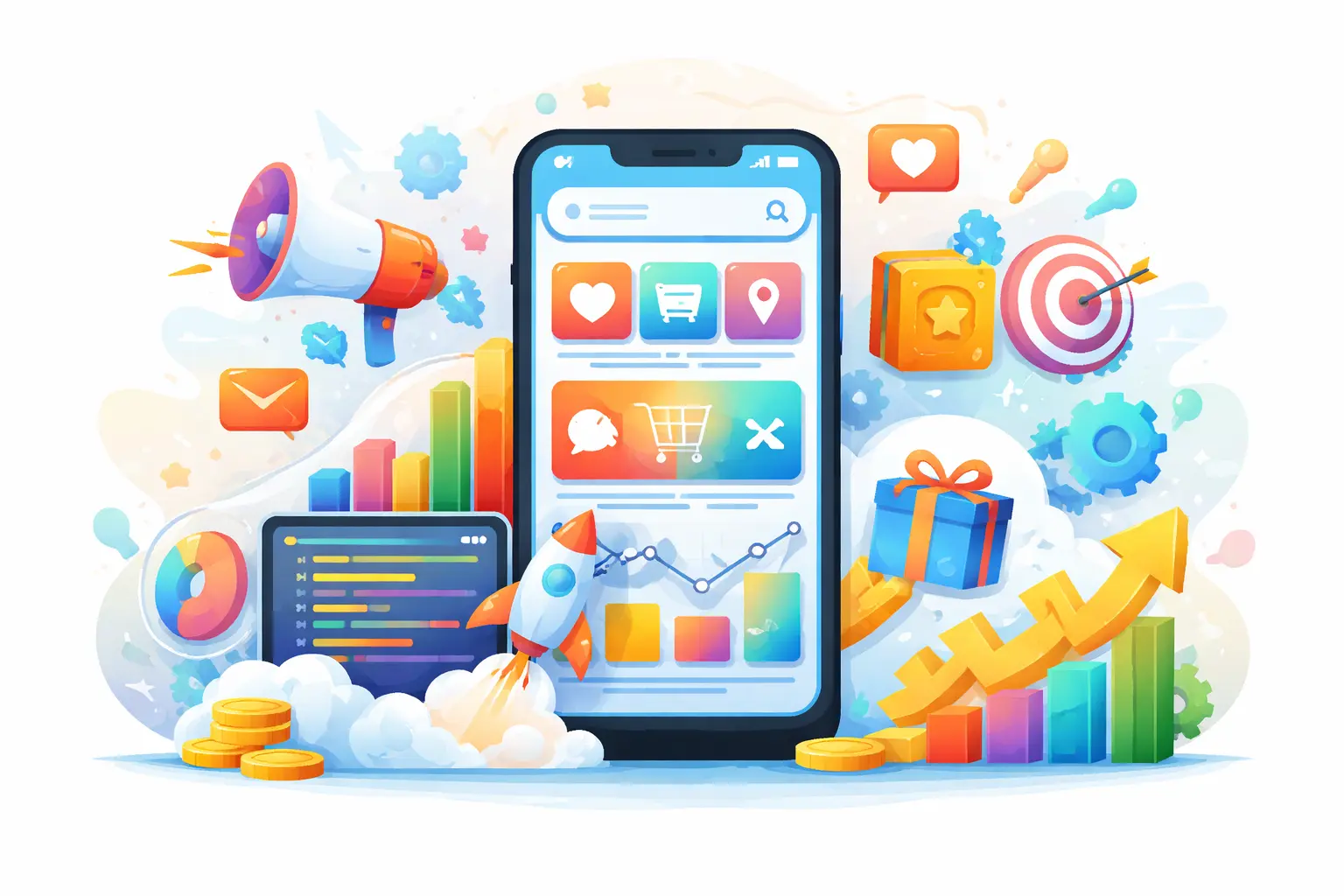
Mobile app development benefits businesses by transforming how they engage with customers. With billions of smartphones in use worldwide, a well-designed app serves as a direct line to users, improving communication, satisfaction, and loyalty. In fact, mobile apps can drive 20–30% higher user engagement than non-app interactions. In this article, we explore how mobile app development boosts customer engagement through modern mobile UX best practices, strategic push notifications, personalization, and smart retention features.
What Is Mobile App Development and Why It Matters
Mobile app development is the process of building software applications that run on smartphones and tablets. These apps provide tailored experiences, real-time interaction, and features that go beyond traditional web experiences. Unlike websites, mobile apps stay installed on devices and continuously remind users of your brand presence, increasing the opportunity for meaningful engagement.
Mobile app development benefits include:
- Direct communication with users
- Personalized content delivery
- Faster performance and offline capabilities
- Deeper customer insights through analytics
These benefits create an environment where customers interact with your brand more frequently, resulting in stronger engagement and increased loyalty.
How Mobile App Development Boosts Customer Engagement
1. Personalized Communication With Push Notifications
One of the most powerful engagement tools in mobile app development benefits is push notifications. These alerts keep users connected by delivering timely updates, reminders, and offers. Studies show that personalized push notifications can re-engage users and increase engagement rates dramatically.
Real stats on push notifications and engagement:
- Personalized push notifications can boost app engagement by up to 4×.
- Sending just one onboarding push notification can increase retention by 71% over two months.
- Strategically timed notifications can re-engage up to 53% of inactive users.
These figures show how push notifications — when aligned with user behavior and preferences — drive repeated interactions and keep the app relevant in users’ daily lives.
2. Superior User Experience Through Mobile UX Best Practices
Mobile UX best practices are essential for engagement. If an app is easy to navigate and delightful to use, users return more often and stay longer. Research reveals that nearly 88% of users are unlikely to return to an app after a poor experience.
Key mobile UX best practices include:
- Intuitive navigation and clear layout
- Fast loading times and responsive design
- Gesture-based controls and consistent UI elements
- Accessibility and personalization
- Clear onboarding flows
UX improvements not only reduce friction but also strengthen emotional connection with your app, encouraging users to engage regularly.
3. Personalization and Contextual Experiences
Mobile apps offer advanced personalization that enhances engagement. By analyzing in-app behavior, apps can present tailored recommendations, customized content, and smart suggestions. Users who receive personalized experiences are far more likely to stay active and make repeat interactions.
Examples of personalization driving engagement:
- Content recommendations based on past behavior
- Dynamic dashboards that adapt to user preferences
- Location-based offers and contextual services
- Time-sensitive deals and alerts
This level of relevance helps apps feel more useful, increasing the likelihood users will open and interact with the app frequently.
4. Real-Time Interactions With In-App Features
Mobile apps can include interactive tools like real-time chat, AI assistants, and in-app support. These features keep users engaged inside the app environment and reduce the need to switch to other platforms.
Examples of real-time engagement features include:
- AI-powered chatbots for instant support
- Live messaging and alerts
- Interactive tutorials and prompts
Immediate responses and assistance make users feel heard and valued, which contributes to improved engagement over time.
5. Gamification and Reward Systems
Gamification elements — like badges, points, leaderboards, and rewards — create incentive-driven interactions that encourage repeat use. Studies show that gamification can increase customer engagement and retention significantly, sometimes up to 30% or more.
Use gamification to:
- Reward users for completing actions
- Encourage daily logins with challenges
- Offer special content for frequent engagement
These tactics tap into human psychology, turning standard tasks into compelling experiences.
Real-World Examples That Illustrate Mobile App Engagement
Smart brands use mobile app engagement strategies effectively. For instance, global food and beverage companies leverage push notifications to send timely offers and personalized deals, while social apps use tailored content recommendations to keep users scrolling and interacting. Innovative mobile apps in sectors like retail, travel, and finance rely on smooth UX and contextual notifications to boost time spent in app and repeat activity.
Measurable Impact: Engagement and Retention Data
To understand how mobile app development benefits your engagement metrics, consider these benchmarks:
- Mobile apps often deliver 3x higher retention than websites.
- Apps optimized with personalization features report 50–70% higher repeat usage.
- Fast, frictionless UX contributes to higher daily and monthly active user counts.
These metrics show how investing in mobile development translates directly into measurable customer engagement improvements.
Conclusion
Mobile app development benefits businesses by delivering powerful engagement tools that strengthen customer connections. Through mobile UX best practices, smart push notifications, personalization, and interactive features, apps create meaningful experiences that encourage frequent interaction and long-term loyalty. With measurable improvements in retention and user activity, mobile apps are no longer optional — they are essential for any brand that wants to thrive in a mobile-first world.