The term mobile application means more than just an app on a phone. Users expect seamless experiences that feel intuitive, fast, and tailored to their needs. Today’s users don’t just download apps — they interact, rely, and judge them based on performance, design, and personal relevance.
Whether it’s a fitness tracker or a shopping platform, users now expect mobile applications to deliver smart personalization, effortless navigation, and cutting-edge features that respond to their daily needs. This article explores the top features users expect from modern mobile apps — based on the latest industry data and trends.
1. Fast Performance and Smooth Navigation
One of the core expectations of any successful mobile application is speed. Users abandon apps that load slowly or lag during navigation. Fast performance means minimal loading times, smooth transitions, and responsiveness even on mid-range devices.
Why It Matters
- Reduces abandonment rates
- Creates a seamless user experience
- Improves retention and session length
Example
A news app that loads articles instantly keeps users engaged longer than one that freezes or displays loading icons frequently.
2. AI-Powered Personalization
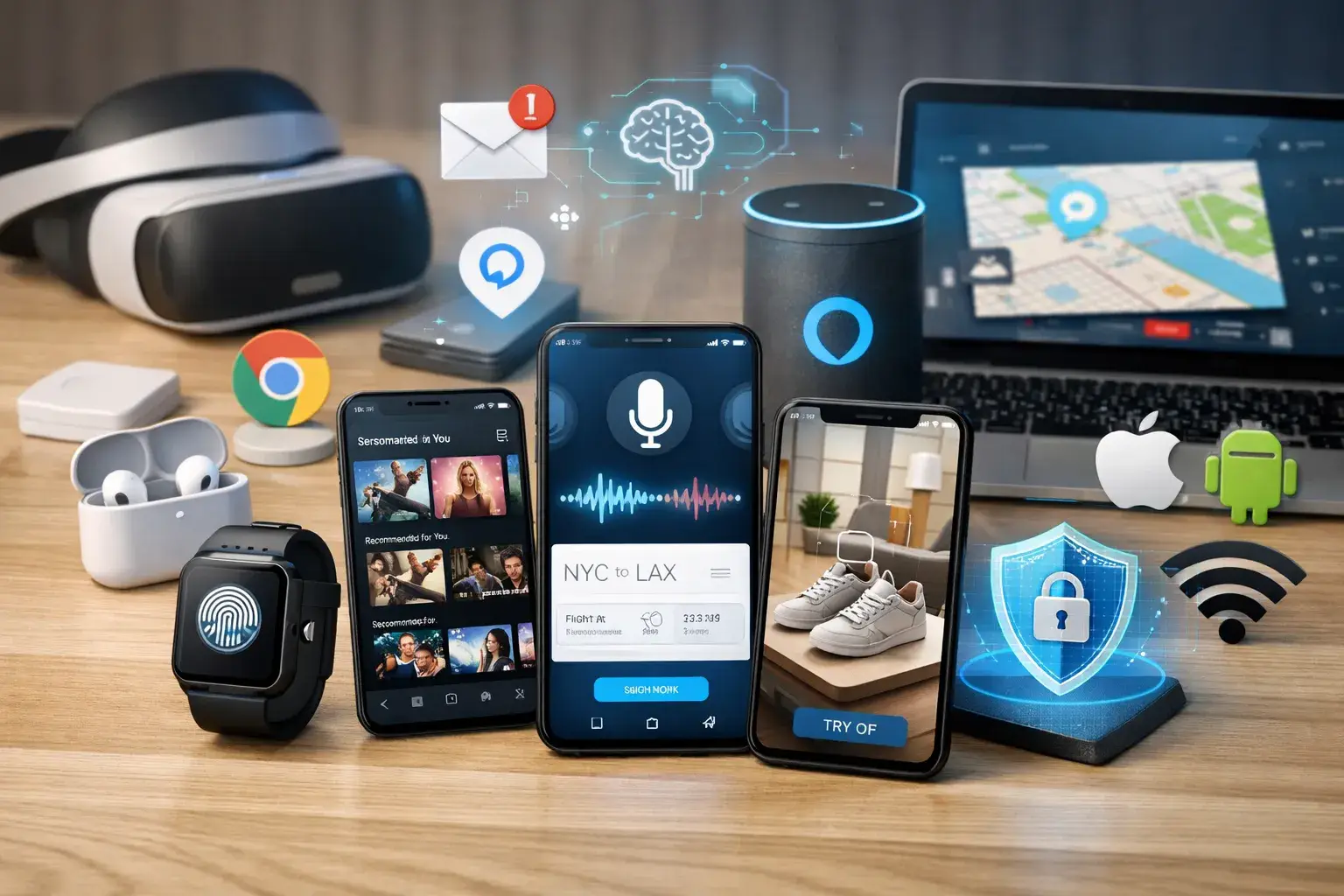
In modern mobile applications, personalization isn’t a luxury — it’s expected. AI and Machine Learning enable apps to adapt to individual behaviors, preferences, and patterns.
Common Personalization Features
- Tailored content recommendations
- Adaptive home screens
- Predictive UX flows based on habits
Real-World Practice
Streaming apps that suggest shows based on viewing history or fitness apps that adapt workouts to user performance both rely on smart algorithms to enhance engagement.
3. Voice Controls and Gesture Navigation
Typing isn’t always convenient, and users increasingly prefer natural input methods. Voice-enabled interfaces and gesture navigation are transforming how people interact with apps.
Benefits
- Hands-free interaction
- Better accessibility
- Faster navigation
Example
A travel app that lets users search flights via voice commands or swipe gestures makes tasks feel effortless.
4. Advanced Security and Data Protection
With rising privacy concerns, users expect transparent, strong security in every mobile application. Biometric authentication like facial recognition or fingerprint unlocks is now standard.
Security Expectations
- Biometric login options
- End-to-end encryption
- Clear data usage policies
Why It Matters
Strong security builds trust and encourages users to engage with sensitive features like payments or personal data storage.
5. Augmented Reality (AR) and Immersive Experiences
AR is no longer limited to gaming; users now expect immersive experiences in shopping, education, travel, and more.
Examples
- Virtual try-ons in retail apps
- Virtual tours in real estate apps
- Interactive learning modules in education apps
Enhancing real-world experiences with digital overlays keeps users more engaged and satisfied.
6. Seamless Cross-Platform Support
Users switch between smartphones, tablets, and sometimes web platforms. They expect a consistent experience across all devices.
Features
- Synced user data in real time
- Unified interface design across platforms
- Progressive Web App (PWA) support
Whether a user moves from their phone to a tablet, the mobile application should feel familiar and consistent.
7. Offline Functionality
Connectivity isn’t always reliable, yet users expect mobile applications to remain usable even offline.
Advantages
- Offline content access
- Cache syncing when back online
- Better usability in remote areas
Example: Maps apps that let you download offline routes or note-taking apps that save content without internet.
8. Customization and User Control
Beyond dark mode, users want control over how their mobile application looks and behaves. Custom themes, layouts, and UI preferences enhance user satisfaction and loyalty.
User Preferences
- Custom color themes
- Flexible layout options
- Dashboard personalization
This level of control makes apps feel personal rather than generic.
9. Smart Push Notifications
Users don’t want generic alerts. They expect contextual, behavior-based notifications that add value without overwhelming.
Notification Best Practices
- Only send relevant updates
- Offer user control over alerts
- Use data insights to personalize messages
Smart alerts help keep users engaged without causing annoyance.
10. Accessibility by Default
Modern mobile applications must be usable by everyone. This includes screen-reader compatibility, clear typography, and UX.
Accessibility Features
- High-contrast text
- Support for assistive tech
- Customizable font sizes
Accessibility expands reach and improves user satisfaction for diverse audiences.
Conclusion
Today’s users expect modern mobile applications to be fast, secure, intuitive, personalized, and accessible. These features aren’t optional — they’re basic expectations that define how people judge and retain mobile apps.
From AI-enhanced personalization and voice input to AR experiences and seamless cross-platform usability, the modern mobile application must continually evolve to meet these rising expectations. By prioritizing these top features, developers can craft apps that delight users and achieve long-term engagement.